Tuesday

They Must Have Been Fools – Zoo Celebrates 30 Years This April Fools Day

30 years ago on April 1st 1984, the Sampson family in Broxbourne entered into their boldest venture yet, when they purchased Broxbourne Zoo, the worst zoo in Britain. To celebrate this momentous occasion, Paradise Wildlife Park are offering their guests entry to the park at the same price as it was in 1984, just £1.50. They only hope that visitors don’t take it for an April fools prank.

Broxbourne Zoo 1985


Broxbourne Zoo, as it was then known, was privately owned by Cyril Stamp up to the mid 1970’s and then Peter Phipps to 1984. Unfortunately a day out at Broxbourne Zoo was remembered for very different reasons to those attributed to a day out at Paradise Wildlife Park. The zoo was notorious for poor animal facilities and by the early 1980's was widely regarded and documented as the worst zoo in Britain. Thankfully, the Sampson Family saw through the terrible reputation of Broxbourne Zoo when they purchased the site on the 1st April 1984. They could see the potential of the area for creating a Zoo the country could be proud of, with conservation and preservation of both rare and endangered animal species at its heart. With the Sampson's drive and passion for wildlife, the unbelievable transformation had begun.

It was the 1990's when the Sampson Family dream really started to take shape. The changing of the sites name to ‘Paradise Wildlife Park' signaled a new beginning of an increasingly brighter future for the site. This decade was vital to the development of the Park in all aspects; with the introduction of more spacious open enclosures, perhaps the most significant of which was the unveiling of ‘Tiger Lodge' a new purpose built enclosure for Bengal & Siberian tigers in 1994; and positive changes such as the move towards many ‘hands on' activities with the animals at the Park and an extensive on-site and off-site education programme. Three new themed adventure playgrounds were also introduced to make a day out at the site even more memorable for visiting families. All facilities at the site were given modern renovations, and changes were made to better accommodate and fulfill the needs of disabled people, with the happiness of the parks visitors of paramount importance. Unsurprisingly with each improvement visitor numbers to Paradise Wildlife Park soared.

Today, Paradise Wildlife Park is a very different zoo and one of only 14 zoos to be members of all three of the leading zoological associations, BIAZA, EAZA and WAZA. To date, they have raised over £2.5 million for conservation and will continue to raise much more into the future. 2013 was their busiest every year in 30 years, and they are looking forward to a repeat success in 2014.

The offer of a £1.50 entry on the 1st of April is genuine and not an April fool's joke. There is no need to call the park to verify this! Thank you.

Paradise Wildlife Park


For more information about Paradise Wildlife Park, please visit our website at www.pwpark.com or alternatively our phone number is 01992 470490. 

Friday

It’s a world of augmented reality at Paradise Wildlife Park!

Here at Paradise Wildlife Park we are the first Zoo in the UK to be exploring the exciting world of Augmented Reality.

So you’re probably thinking, what is Augmented Reality?

Augmented reality put simply, allows you to look through your iPad camera and see things that aren’t really there, but looks like they are. The techy bit… Augment reality is the technology that overlay digital content (3D images, graphic or video etc.) onto a live stream of the real world.


Ok, the easy thing is just to show you. So please go onto the App Store or Google Play and download the 'Augment' app.


Once you have downloaded the app it should give you the option to scan something. So why wait, hit that scan button, and scan the image below. Make sure you scan the whole image from straight on.


All going well there should be a very real looking Tyrannosaurus Rex skeleton appearing on your screen right now?

Hopefully that worked and you should start to have a much better idea of what augmented reality is all about. It is a brilliant technology that has been around for a little white, but is now becoming much more popular. This is because the technology to use it is available to everyone with an Ipad, Smartphone or tablet.

For over a year now we at Paradise Wildlife Park have been looking into how we can develop new entertainment around the park using augmented reality. We have been exploring different technologies and platform. We were looking for a platform that would allow us to upload our own ideas, graphics and allow our visitors to use it for free.

Our marketing department had almost thrown in the towel in the search for the exact platform until they came across ‘Augment’. It was a unique app created by a very small team in Paris, led by a man called Jean-Francois Chianetta and marketed by marketed by Mickael Jordan.

We were so thrilled to have found the ‘Augment’ guys that we very quickly invited them over to visit Paradise Wildlife Park. It wasn’t too tricky to convince them to come over from France, especially with the enticement of the opportunity to hand feed one of our Big cats.

It worked a treat and very soon after contacting them they were on a Eurostar train. They’re really great guys and whilst here they were able to help us better understand their technology and its capabilities. They were also kind enough to agree to changing the app slightly so it met our requirements.


Jean-Francois Chianetta


Mickael Jordan

Since then, we've used their augment platform to create several different fun and interactive trails around the park. These include, a pumpkin hunt for Halloween, reindeer hunt for Christmas and a penguin trail this Winter.


We also launched our first fully fledged attraction, the 3D Woodland Dinosaur Trail, to coincide with the release of Walking with Dinosaurs, the 3D movie. The virtual dinosaurs we have here are all life-sized so they've had a great impact on those who've seen them so far! There are 9 of them in total, and we are constantly working on them and improving. We hope to add some animation and soft shadows very soon!


So for now keep your eyes peeled and your ears to the ground as the exciting world of augmented reality is only just beginning. For more information or to explore augment reality further come to Paradise Wildlife Park!


Thursday

Our vet Dr. John Lewis visits Paradise…


John Lewis has been a full-time zoo and wildlife vet for the past 27 years, working in a variety of zoo and field situations in an equally wide variety of countries. He is a partner in the International Zoo Veterinary Group and a co-founder of the UK charity Wildlife VetsInternational, which provides specialist veterinary services to conservation projects. John's particular interests are the conservation of the larger cat species and anaesthesia of non-domestic animals.

John who has been an associate and friend to Paradise for a number of years really knows his stuff. Our zoo keeper team trusts him with all veterinary procedures no matter how big or small. Being such a highly regarded veterinary surgeon not just in this country but internationally means John is a very busy man. This occasionally means that when he is available to visit Paradise he has a very long list of jobs. This was most definitely the case when I spent the day shadowing him yesterday...

First on John’s list was three female otters that were due to have an implant put in to prevent them from breeding in the future. But before they could be brought in the keepers had to distinguish which female otters they needed and then the hardest part would be to catch them safely. Otters may be very cute in their appearance, but they can be very feisty animals, with sharp teeth for tearing apart and eating fish.  Also with speed on their side and the ability to swim under water making finding and catching them very difficult. Each otter was brought in one at a time and placed on anesthetic to send it to sleep; this allowed John to quickly and easily follow out the procedure, whilst also doing a quick health check of their teeth, skin and weight etc.


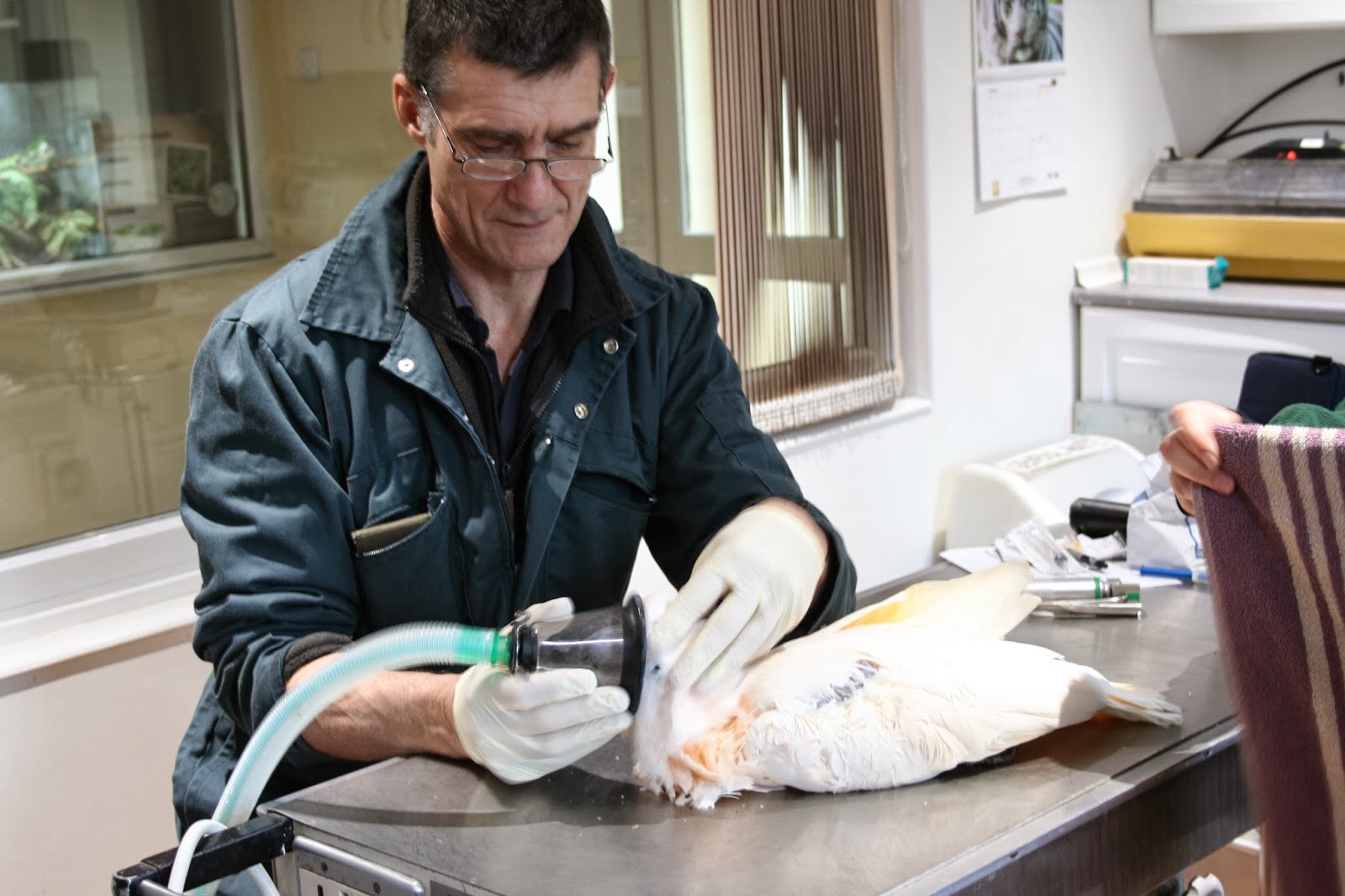
Next to visit John was Bobby our Moloccan Cockatoo who is a favourite with many of our guests for his talkative nature. Unfortunately, despite Bobby’s cheerful and chatty behaviour he can’t seem to maintain his weight. Our keepers have tried upping his food, moving him into a larger enclosure and giving him company from a fellow bird. He seems more than happy but still isn’t gaining weight. John the vet decided that the best option would be to place Bobby on gas to take a blood sample and to give Bobby a health check.  We will have to wait a couple of weeks to see if the blood sample gives us any feedback. But for now, John concluded that Bobby looks healthy and is fine.


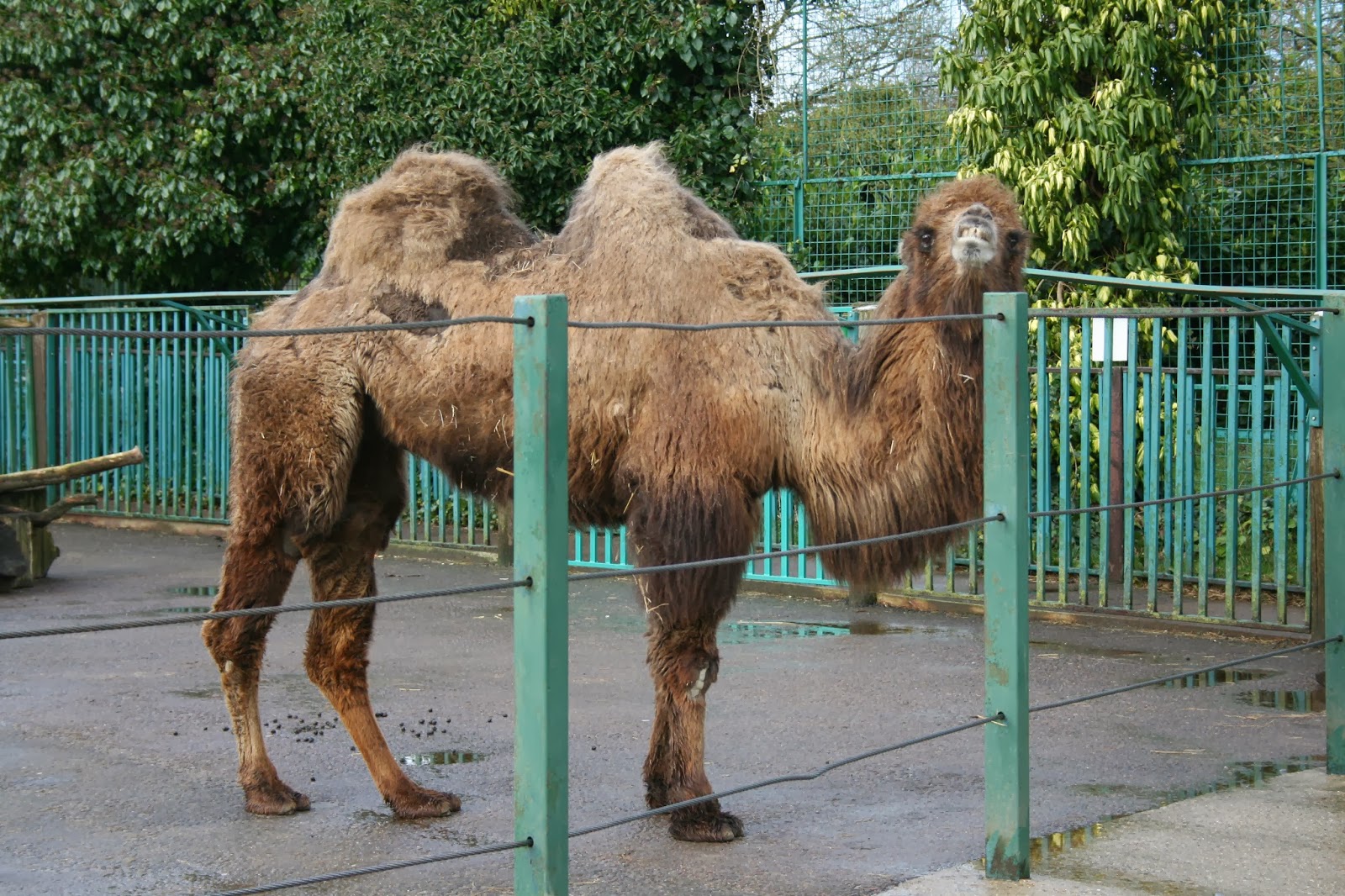
One of our camels has been suffering with an unknown skin condition for some time now, causing her mild discomfort. It was time for John to take a look. The keepers have tried a variety of medicines, special shampoos and camel friendly moisturisers but nothing has worked so far. John decided that a skin biopsy and blood samples would be needed to determine what was wrong. With larger or more dangerous animals it is necessary to dart them with anaesthetic. This is to send them to sleep whilst the vet does his work. The keepers were asked by John to place a dark towel over the camel’s eyes so she remained calm throughout the veterinary procedure.  The skin and blood samples taken from the camel will be sent off for assessment, but for now John suspects it could be mites that are irritating her skin.


After a quick break for coffee and lunch, John and the team of keepers headed over to the woodland area where three of our wolf siblings are housed.  The male wolf, Romulus, was to have a vasectomy as the keepers do not want him to breed with his two female siblings. This veterinary operation has to take place in our sterile vet room and therefore it was necessary to move the young male wolf from one side of the park to the other in order for John to operate. As with our camel, a dart was required to send the wolf to sleep whilst moving and operating. Once the wolf was in the vet room John proceded with the vasectomy, explaining what he was doing as he went through. The young male is now back in his enclosure recovering well from his operation.


John’s final job of the day was with one of our White lionesses. She required an injection and an implant. After checking her records John was happy to follow through with the procedure. Since she is a large and dangerous animal, a dart was required.  Luckily John had a good aim with the dart and it wasn’t long before she was asleep. John was able to carry out this particular procedure in her enclosure without the need to move her to the vet room. To keep stress to a minimum for the pride, she was separated and out of sight from them. Finally John finished off with a quick health check on the lioness and then we waited for her to come back around (outside of the enclosure of course!) and then we left her to it to recover in peace.


Well, we hope that gives you an interesting insight to some of the vet work that happens at Paradise Wildlife Park. Stay tuned by registering your email address in the subscribe box for more interesting news and information from Paradise's Zoo News!


Monday

Paradise's brand new wolf experience has arrived!

On Saturday the 7th of September here in Paradise Wildlife Park we had a very lucky group of people who were used as guinea pigs for our latest animal experience, the Meet the Wolves Experience. It's an early start for this experience so the trial group had to be in the park at 8:30am. This early start time will allow visitors to get the best interaction with the wolves.
 

The trial group were greeted by our keepers Pia and Ricky in the Discovery Centre and were taken to the meat room where the food is prepared. Despite only being a trial run of the experience both Pia and Ricky didn't hold back on their knowledge, they continually told the group lots interesting facts about the wolves. This is something that all our keepers here in Paradise do really well and it gives all of our experiences an extra level of depth.


Following the meat room, the group walked over to our two older female wolves, Misha and Tatra. There is a year between the two of them; Tatra had been raised alongside an Alsatian, which means she has a lot calmer, more people friendly personality than her sister Misha.


After meeting the two girls through the mesh, the group of guinea pigs then headed over to our brand new enclosure in the Paradise woods to meet our other three wolves, Romulus, Inga and Anya. These youngsters have been with us for around a year and they arrived at six weeks old. Despite that seeming young, it's actually very late to start socialising them with people. So the keepers spent an incredible 7 months with them 24 hours a day, sleeping with them in their house and everything. Only a few people were chosen to be in their 'pack'. And the wolves still have a very strong connection with that group.


The new enclosure has been fraught with problems during the construction, but we at Paradise are pleased to say it's been worth the wait. The behaviour of the wolves changed dramatically when they were released into their new home, and they seem very happy, calm and relaxed.


Unlike with the two older girls, it's possible for the public to go in with the youngsters. Largely thanks to the hard work the keepers put in with them in the early days. Despite the reassurances of safety, it's an exhilarating experience as you're always fully aware that you're in free contact with wild animals. 


The group filed into the main enclosure, one by one, through the metal 'airlock' system and then sat on the bench just inside. The wolves came straight up to the group and immediately began sniffing them. The group had been advised not to wear perfume or aftershave. These strong smells can lead the wolves to being over-interested in our visitors, if this where to happen then it would lead to the experience coming to an abrupt end due to safety reasons. But all was fine and the wolves spent quite a lot of time with the group being very interested and attentive. Then after a while, they began to lose interest and retreated to the back of their enclosure. 

This was the groups cue to leave the enclosure and to circle round the outside. The best part of the trial experience was yet to come, as the group were now able to hand feed the wolves through the mesh. For obvious reasons, it's not a good idea to do this in free contact. Therefore all of our feeding experiences with our larger predator animals here at Paradise are fed through the mesh enclosures for safety. 

That said, the wolves were incredibly gentle when being fed by the group. The wolves were fed a mixture of horse meat and their favourite, sardines. Strangely, from time to time, the wolves would reject a piece of meat for no obvious reason. Often, one of the siblings would happily take the same piece. After the feed was finished, the wolves ran around their enclosure in an excited fashion, raising their tails. This is brilliant natural behaviour and shows how happy and settled the pack is here in Paradise Wildlife Park.


The feedback from our group of guinea pigs was extremely positive. They described it as a brilliant experience and they'd highly recommend it to anyone, Wolf lover or not.


This educational, exciting and enjoyable experience will be one you remember forever. The experience is now able to book on our website at:  http://www.pwpark.com


Below you can see a photograph of the three younger wolves when they first arrived at Paradise, only 6 weeks old. As you can see they have grown up quite a lot since their arrival.


Moving the two Amur Tiger sisters

In Mid-September a team of staff from Paradise Wildlife Park and Wildlife Heritage Foundation were involved in the exciting and nerve racking process of moving two big cats.
Sisters Siberia and Alina were the two Amur tigers to be moved. Born only last year, they are already somewhat famous, having featured on the TV show, Nature's Newborns. The two girls were from an original litter of four, but sadly the runt of that litter didn't make it through the first 24 hours. However the three remaining female cubs survived and as pure-bred Amur's they will play a vital role in the breeding and reintroduction program. Only two of the three cubs would be coming to Paradise, and the decision over who it was to be was actually made by themselves. The two boldest cubs came into the house when called, and the cub that most heavily relied on her mother Ronja, was the one that stayed with her.

The move had been largely thought out, moving the two Tigers from Wildlife Heritage Foundation in Kent, to Paradise Wildlife Park in Hertfordshire. They were destined to share an enclosure with Paradise favourite, Rocky the hybrid tiger. Predominately cats aren't tranquilised for transporting, instead they are gradually trained to go into the movement crates of their own accord and travel fully awake. But in this case, it was necessary to perform some important health checks and vaccinations, so to keep the stress to a minimum for the animals, we combined all of the activities together. Follow the story through the photos and captions below...
There was a great deal to be done before the process could began. This was one of the crates used for the move. They are purposely small to reduce the free movement of the cats during transit to reduce the risk of injury.

World renowned big cat expert and world leading authority on big cat medicine and conservation, Dr John Lewis preparing the anaesthetics and paperwork ready for the move. John is a member of the IUCN SSC Cat Specialist Group, veterinary advisor to the Amur leopard and tiger Endangered Species Breeding Programme (EEP), a range of felid and primate field conservation programmes, a trustee of the UK based charity AMUR and is widely published on veterinary aspects of non-domestic medicine.


In order to keep the stress minimal. John asked us to stay outside for the first procedure with Alina as her sister Siberia was in the adjacent enclosure. Here you can see Alina being carried out first having had all her checks completed.


John and Zoo keeper Aaron Whitnall from Paradise Wildlife Park check on Alina as she is carefully placed into her crate.


Alina is safely into the crate, the team keeps a close eye on her breathing.


To make identifying the two new Tigers easier for our keepers at Paradise Wildlife Park, photos of their faces are used to show their unique eyebrow markings and distinguish them apart.


John administers the stimulant to bring Alina out of the anaesthetic.


The team were stationed around to keep a close eye on her breathing and track her progress. There was a terrifying moment when she appeared to have stopped breathing. But she soon started again. It's common for cats to hold their breath when wakening from a sedative. But John wasn't taking any chances. In the event that she had stopped breathing, a tube would have been inserted into her nostril and she would have been helped along in a similar way to a person.


Alina came around with ease and the outer case for the crate was put in place.


She was then carried to the van where it was dark and quiet.


As you can see she's not light so it takes a whole team of people to move her carefully to the van.


Then it was Siberia's turn, she could tell something was up, however she remained calm throughout.


John calmly and quietly walked in with the dart gun, hiding it behind his back so as not to cause distress to Siberia.

It took just a few minutes for the sedatives to take effect.


As soon as it was safe to do so John began the examination on Siberia.


Becky from the Wildlife Heritage Foundation checks Siberia's microchip against her records.


John takes a photo of Siberia's eyebrow markings to compare with Alina's.


Checking for any dental problems.


John checks Siberia for any heart mumours using a stethoscope, this is a common problem with Amur tigers.

Checking her claws and pads.

Amazingly John is able to perform an ECG on Siberia using an iPhone. Can you believe there is an app for that? Wow!

After the examination, Siberia is lifted into her crate.


John answered some questions for the students and volunteers who were present.


Tightly wedged in, the crates are unable to move during transit.


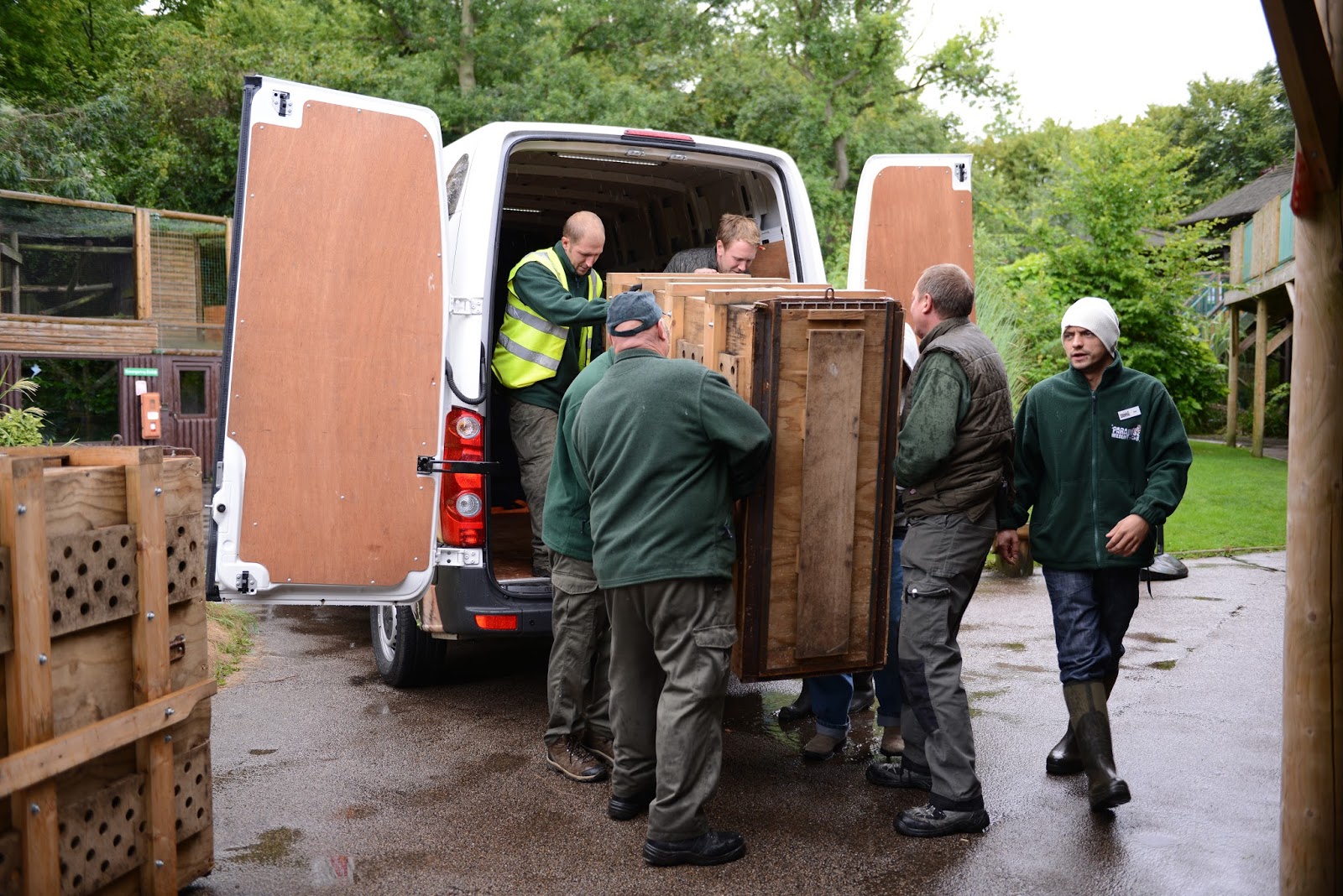
We arrive back Paradise Wildlife Park in the pouring rain. The Keepers and Zoo staff help unload the girls.

The crate is then safely put up against the entrance to their new house.


It's then a waiting game for the Tigers to get enough confidence to leave the crate on their own.


Finally out of the crate, Siberia settled down quickly.


And that was it, the end of a very tiring day and successful day for all the team member and the Tigers.

The girls are currently settling into their new environment. Rocky isn't sure about them just yet. But he'll no doubt get used to them soon enough. They'll be apart for at least 30 days before a gradual introduction process is begun. We will keep you posted on the developments!

**UPDATE

Rocky and the girls have been introduced! And they're getting on brilliantly. As you can see from the photo below!